


Online



Winter Low-Temperature Operation Guide for Steel Pipe Stacking Machines: Air Supply, Lubrication, and the Electrical Cabinet Fail First
2026-11-11
When temperatures drop in northern workshops, the faults on a stacking machine start to look different: cylinders that won't move at the start of the morning shift, sluggish clamps, false sensor alarms — and then everything seems to "fix itself" once the workshop warms up in the afternoon. Nine times out of ten the machine isn't broken; low temperature is simply amplifying hidden problems in three places: the air supply, the lubrication, and the electrics. Deal with the following before winter sets in, and the line will run steadily through the cold season.
1. Water in the air supply is the number-one winter failure source
Compressed air releases condensate as it cools. In warm months that water simply drains out of the lines; below freezing it collects in filter bowls, low points of the piping, and the pilot ports of solenoid valves — showing up as cylinders that won't actuate, slow motion, or a valve that keeps sticking. Three practical steps:
- Drain the air preparation units (filter, regulator, lubricator) manually once before the start of every shift; for workshops below 0℃, switch to models with an automatic drain;
- Install or check a refrigerated air dryer downstream of the compressor; as a general engineering rule, keep the pressure dew point 5—10℃ below the lowest workshop temperature;
- Run the main air lines with a steady slope, avoid low spots in the middle, and fit a drain valve at the lowest end point so water never gets pushed right up to the solenoid valves.
2. Change lubricant grades before winter
Conventional grease on chains, guide rails, and bearings gets thicker and flows poorly in the cold. A chain that ran smoothly in summer turns sluggish, drive current rises, and wear accelerates. The practical approach: switch to low-temperature grease before winter (a -20℃ grade is usually sufficient) and choose a lower-viscosity chain oil. Shorten the maintenance interval as well — a chain serviced every 500 hours in warm months should be checked and re-greased at around 400 hours in the cold season.
3. Condensation in the electrical cabinet matters more than frost
With large day-night temperature swings in the workshop, warm air trapped inside the cabinet condenses on circuit boards and terminals overnight, and the morning start-up is greeted by unexplained alarms and communication dropouts. Countermeasures: install a cabinet heater or dehumidifying heating panel, keep the cabinet powered when the line stops so it stays slightly warmer than the surroundings, and check or replace the door seals and seal all cable entry points before winter. Also wipe the sensing faces of photoelectric and proximity switches at the start of every shift — frost and condensation there cause most false alarms, and this one habit cuts them down sharply.
4. On cold starts, let the machine warm up unloaded first
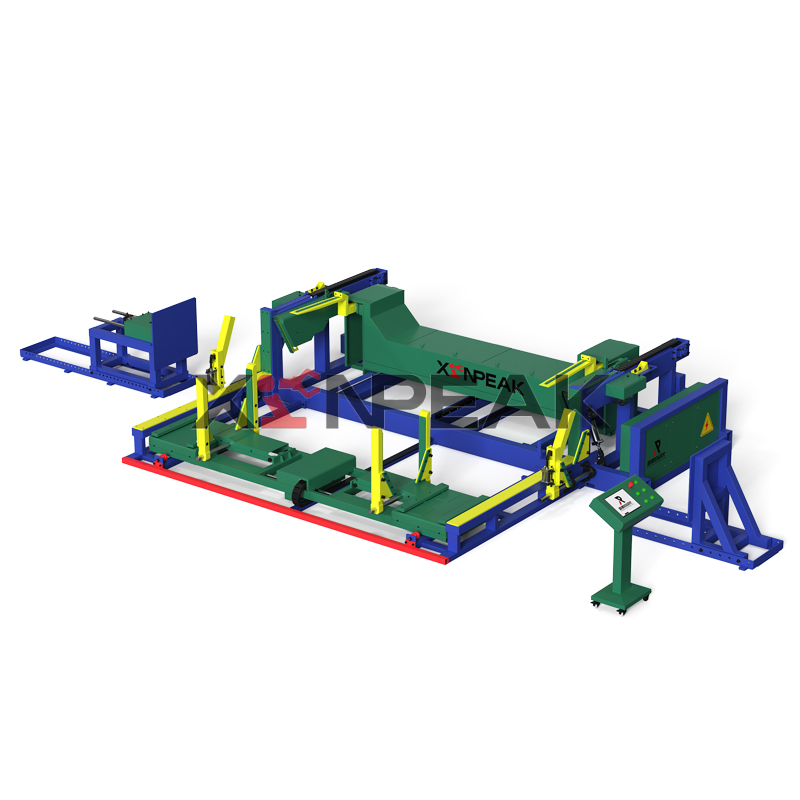
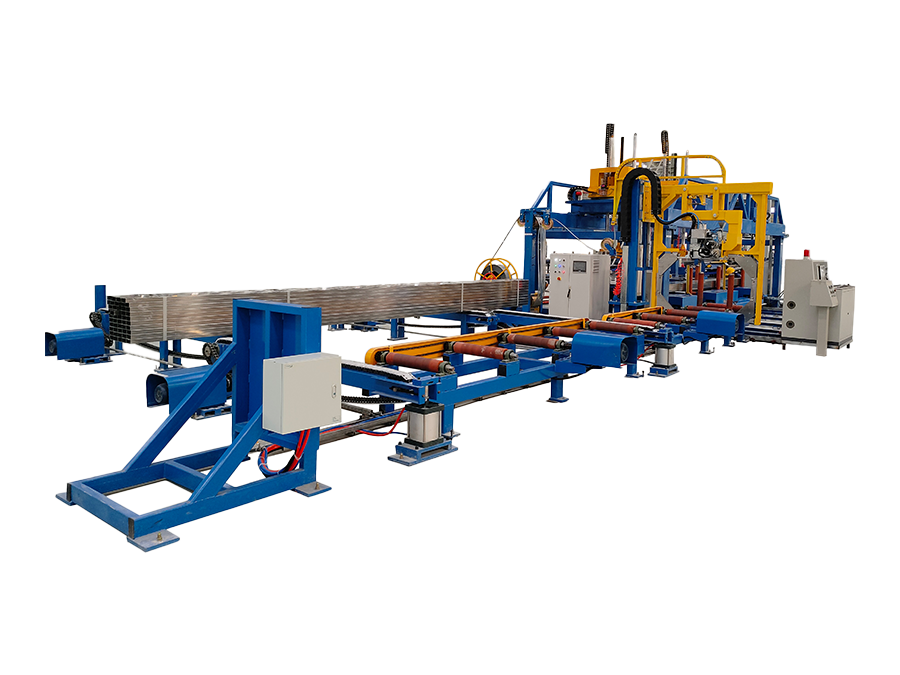
Whether it's a simple unit or a gantry-type steel pipe stacking machine, don't run at full cycle rate at the start of a winter shift. Run 5—10 minutes unloaded so the cylinders, chains, and gearboxes get their temperature and lubrication "moving", then return to the normal stacking cycle — the rated capacity of 600—1,200 pipes per hour refers to stable operation under normal conditions. Manually verify positioning accuracy on the first stack. One more easily overlooked point: cylinder seals are stiffer in the cold, and high-speed running without proper warm-up shortens seal life noticeably — that costs far more than the few extra minutes of warm-up.
5. Four weekly winter checks — and don't forget the people
Beyond the routine inspection, check four items weekly in winter: chain tension (elongation changes in the cold), reliable operation of limit switches, tightness of anchor and gantry column bolts, and the condition of the ground wire. On the human side, keep an eye on the walkways around the stacking area: cooling water carried in by the pipes freezes on the floor and is the most common personnel safety hazard of the cold season. Export the fault log from the control panel once a week and compare it with warm-season data — a rise in "motion timeout" alarms usually means the lubrication or the air supply is trying to tell you something. Don't wait for a breakdown to act.
Closing
Low temperature itself doesn't harm the machine — untreated condensate, wrong-season grease, and condensation in the cabinet do. Take one shutdown weekend before winter to go through the air supply, lubrication, and electrical cabinet, and your capacity and cycle rate will hold steady through the cold months.
Related News
How to Size an Automatic Steel Pipe Stacking Machine: Match the Cycle Time, Not Just the Speed
Key Advantages of the Automatic Steel Pipe Stacking Machine
Automatic Steel Pipe Palletizer: The Intelligent “Assembler” for Pipe Production Lines
Is it difficult to operate an automatic steel pipe palletizing machine?
For what production scenarios is the steel pipe palletizer suitable?
Besides production line data, what other metrics can be used to quantify training effectiveness?
How to train operators to familiarize them with rapid troubleshooting methods for common faults.
What methods can be used to improve the production efficiency of automatic steel pipe palletizers?
In which production stages do faults related to feeding and positioning typically occur?
What are the common faults of automatic steel pipe palletizers?




Contact Us
You can contact us through the following four methods. We will reply to your inquiry within 2-8 hours after receiving it!
Call Us
Send Email
Leave a Message
Add WeChat or WhatsApp


