


Online



Stack Pattern Design for Steel Pipe Stacking Machines: Neat Is Only the Start — What Counts Is a Stack That Survives Strapping and Transport
2026-11-16
At acceptance, most buyers check two things on a stacking machine: whether throughput really reaches 600—1,200 pipes per hour, and whether the stack faces look neat. The real problems appear later, at dispatch — two pipes roll off the end when the forklift hits a bump, the whole bundle slips during lifting, a few pipes tumble out when the truck brakes. A poorly designed stack pattern pays back, with interest, every hour it saved at the palletizing station, in the form of transport losses and claims. Here is how to define, form, and strap a stack pattern in engineering practice.
1. Start with three numbers: single-pipe weight, stack height, stacking style
A stack pattern is not a rectangle sketched on the back of an envelope. First calculate the single-pipe weight: once diameter, wall thickness, and length are fixed, that weight determines the load on the bottom layer, the strapping specification, and how many pipes the gripper takes per cycle. For stack height, the common practice is 1.2—1.6 m including the pallet or cradle: go higher and the center of gravity rises, the overturning moment in forklift turns grows sharply, and the straps work harder. Stacking style follows the destination — a large rectangular stack is fine for on-site storage, but anything heading for a long haul by truck should be designed for strapping and lifting from the start.
2. Square bundles, hex bundles, staggered layers — each has its place
The square (rectangular) bundle is the default at welded-pipe plants: easy to strap, count, fork, and containerize, formed simply by adjusting the stacking roller angle. The hexagonal bundle adds more value for round pipe — the pipes interlock, layers self-lock against each other, and the bundle rides long hauls and whole-bundle lifts better; it is common in export pack styles. Staggered (cross-bonded) stacking suits square and rectangular tube: each layer lands offset by about half a pipe width from the one below, so the layers key into each other, and the stack holds together far better than a straight "well-style" column.
3. The core anti-collapse moves: stagger the seams, taper the count
Stacks collapse for one high-frequency reason: the pipe seams line up from layer to layer, creating a continuous joint that shifts as a block the moment anything moves. Two engineering rules fix it. First, stagger the seams — each layer lands offset by roughly half a pipe diameter from the layer below, keeping the center of gravity inside the stack body. Second, taper the count — reduce each layer by 1—2 pipes and pull it inward, so the stack narrows gently from a wide base to a narrower top. On long bundles of 6 m pipes, add a "waist strap" around the middle; otherwise road vibration eventually loosens the middle of the bundle first.
4. Stack pattern parameters must be set on the machine, not just on paper
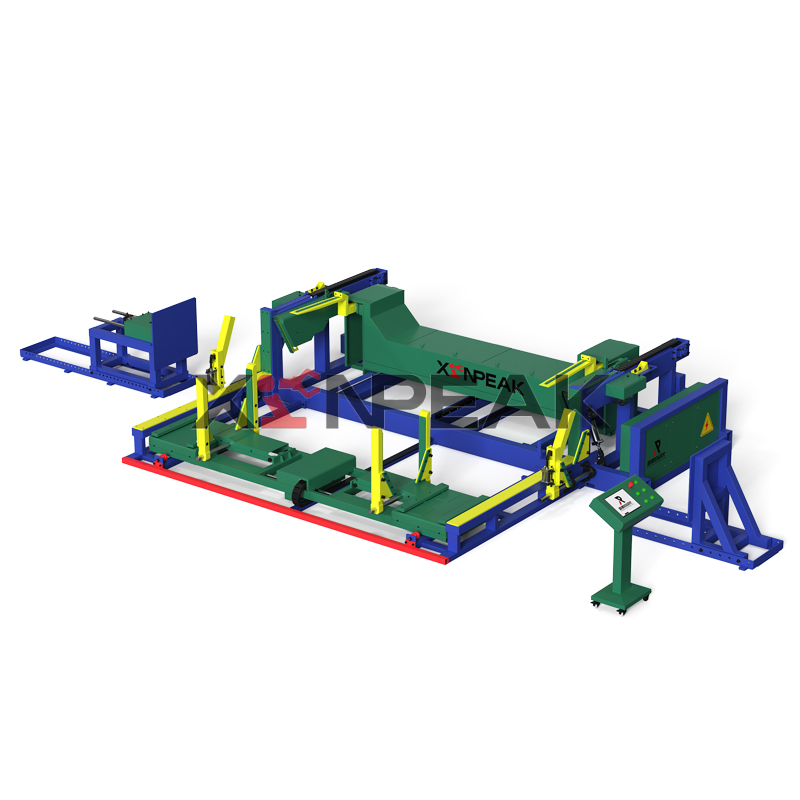
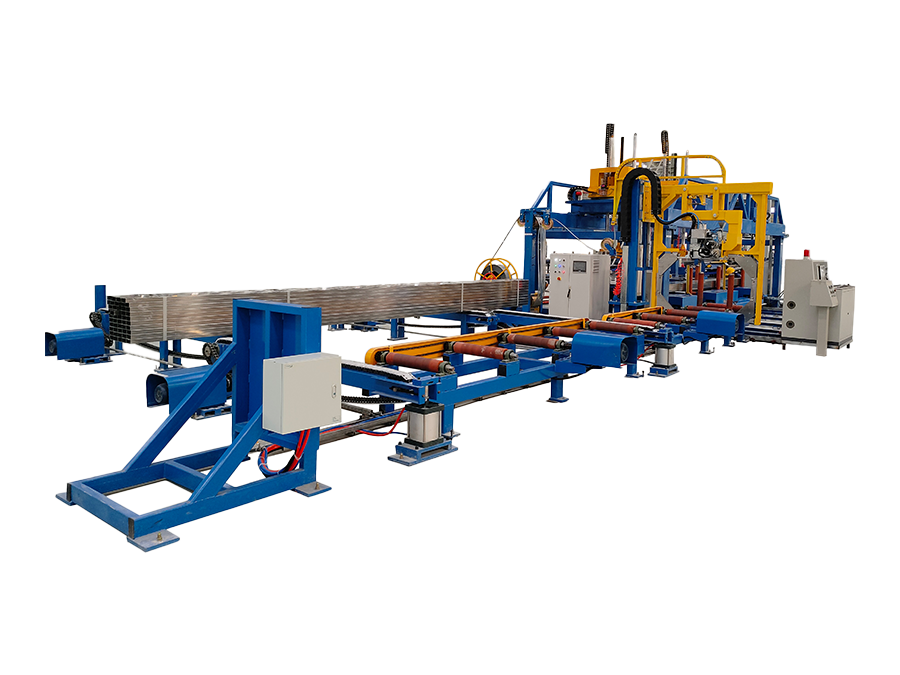
Once the pattern is defined, it becomes a recipe on the stacking machine: stacking roller angle, layer-height datum, pipes per layer, and the taper rule are all programmed in. Switching patterns works like switching pipe sizes — recall the recipe and the machine is running again in 5—10 minutes. Two reminders: the layer-height datum must be measured and verified on the real stack, aligned to the machine's ±0.1mm-class positioning accuracy, or the stack never packs solid; and the counting signal must match the pipes-per-layer figure, because miscounts turn into inventory and dispatch disputes. Also note that a larger stack means a longer cycle per stack — the 600—1,200 pipes-per-hour figure should be converted against your actual stack size when evaluating real capacity.
5. Strapping and handling finish the job
A stable stack is only half the work; strapping and transport finish it. Strap count: no fewer than 3—4 straps per bundle, with one within 0.5 m of each end — a common field rule. The strap should bite into the waist of the bundle, not just the pipe ends; straps applied only at the ends splay them outward. In handling, forklift tines must enter the full depth of the bundle base — no half-inserted tipping — and lifting uses two slings cradling the bundle from below, never a single through-core lift. The stacking machine replaces the heavy labor of 4—8 stacking workers; it does not exempt the site from the rules of strapping and handling.
Conclusion
Stack pattern design is the interface between the palletizing machine and transport: neat stacking serves appearance and warehouse density, stable stacking serves strapping and safety. Settle pipe type, stack pattern, bundle pattern, and destination before placing the order; write stack height, seam stagger, taper, and strap count into the acceptance criteria, and most of the collapse claims and rework later on disappear on their own.
Related News
Winter Low-Temperature Operation Guide for Steel Pipe Stacking Machines: Air Supply, Lubrication, and the Electrical Cabinet Fail First
How to Size an Automatic Steel Pipe Stacking Machine: Match the Cycle Time, Not Just the Speed
Key Advantages of the Automatic Steel Pipe Stacking Machine
Automatic Steel Pipe Palletizer: The Intelligent “Assembler” for Pipe Production Lines
Is it difficult to operate an automatic steel pipe palletizing machine?
For what production scenarios is the steel pipe palletizer suitable?
Besides production line data, what other metrics can be used to quantify training effectiveness?
How to train operators to familiarize them with rapid troubleshooting methods for common faults.
What methods can be used to improve the production efficiency of automatic steel pipe palletizers?
In which production stages do faults related to feeding and positioning typically occur?





Contact Us
You can contact us through the following four methods. We will reply to your inquiry within 2-8 hours after receiving it!
Call Us
Send Email
Leave a Message
Add WeChat or WhatsApp


