












Online



Automatic palletizing machine for welded pipes
2026-01-23
Analysis of automatic palletizing machine for welded pipes
1、 Core functions and values
The automatic palletizing machine for welded pipes is a specialized equipment designed for the production scenario of welded pipes. Its core function is to achieve efficient and precise stacking of welded pipes. Through automated operations, this equipment can significantly improve production efficiency, reduce manual labor intensity, while ensuring consistency in palletizing quality and reducing damage or unstable stacking caused by human operation.
2、 Key technical components
actuator
Lifting device: Adjust the height of the gripping device to meet the requirements of different stacking layers.
Rotating device: Control the rotation angle of the grasping device to ensure that the welded pipe is placed in the preset direction.
Expansion device: Adjust the distance between the grasping device and the welded pipe to achieve precise grasping.
Grasping device: Customized design based on the shape of the welded pipe (such as circular or square), using mechanical grippers or vacuum suction cups to ensure stable grasping without damaging the surface of the pipe.
control system
Using PLC (Programmable Logic Controller) or industrial computer as the core, control the actions of the executing mechanism through preset programs.
Integrated signal receiving module, which can be linked with other equipment on the production line (such as conveyor belts and detection instruments) to achieve automated process connection.
Support logical operations and motion control algorithms to ensure palletizing path optimization, speed matching, and handling of abnormal situations (such as collision avoidance and emergency stop response).
Sensor system
Position sensor: Real time monitoring of the position relationship between the grasping device and the welded pipe, feedback to the control system to adjust the action accuracy.
Visual sensor: Using machine vision technology to identify the size, shape, and surface defects of welded pipes, providing data support for grasping strategies.
Weight sensor (optional): detects the weight of the welded pipe, assists the control system in adjusting the gripping force and stacking method, and prevents overloading or tipping risks.
3、 Core advantages
Efficient operation: It can run continuously for 24 hours, and the stacking speed is much higher than manual labor, meeting the needs of large-scale production.
Accurate and stable: Through mechanical positioning and sensor feedback, ensure that the stacking position and direction of each layer of welded pipes are consistent, and improve the utilization of storage space.
Flexible adaptation: Supports customized design, can adapt to welded pipes of different diameters and lengths, as well as various stacking forms such as square bags and hexagonal bags.
Safe and reliable: Reduce the risk of direct human contact with high-speed moving parts or heavy-duty welded pipes, and lower the rate of work-related accidents.
4、 Application scenarios
Welded pipe production enterprise: used at the end of the production line to automatically stack finished welded pipes onto pallets or storage areas for subsequent transportation or storage.
Logistics warehousing center: Automated sorting of welded pipes for batch storage to improve cargo loading and unloading efficiency.
Steel pipe processing workshop: Cooperate with cutting, welding and other processes to achieve automatic stacking of welded pipes after processing, optimizing the production process.
5、 Purchase suggestions
Specification matching: Select palletizers that support a wide range of welded pipe diameters and lengths based on production needs to avoid equipment idleness or increased costs of renovation and upgrading due to mismatched specifications.
Efficiency collaboration: Based on the production line capacity and warehousing needs, select models with matching palletizing speeds (such as high-speed production lines that require faster palletizing equipment).
Automation level: Depending on the budget and the skill level of the operators, choose between fully automatic or semi-automatic palletizers. Fully automatic models can achieve unmanned operation, but the cost is relatively high; Semi automatic models require manual assistance and have relatively lower costs.
After sales service: Choose a supplier with a comprehensive after-sales service system to ensure timely maintenance and technical support in case of equipment failure, reducing downtime.
Intelligent upgrade: Priority should be given to devices that integrate AI visual recognition, adaptive control, and other intelligent technologies to improve palletizing accuracy and the ability to cope with complex scenes.
Energy saving and environmental protection: Pay attention to the energy consumption indicators of equipment, choose products that use energy-saving technologies such as low-energy motors and energy recovery systems, reduce operating costs, and meet green manufacturing requirements.
Related News
Longmen type pipe automatic palletizing machine: a powerful assistant for intelligent warehousing
Introduction to Steel Pipe Stacking Machine in Steel Plant
What is an automatic steel palletizing machine
What is a steel pipe palletizer
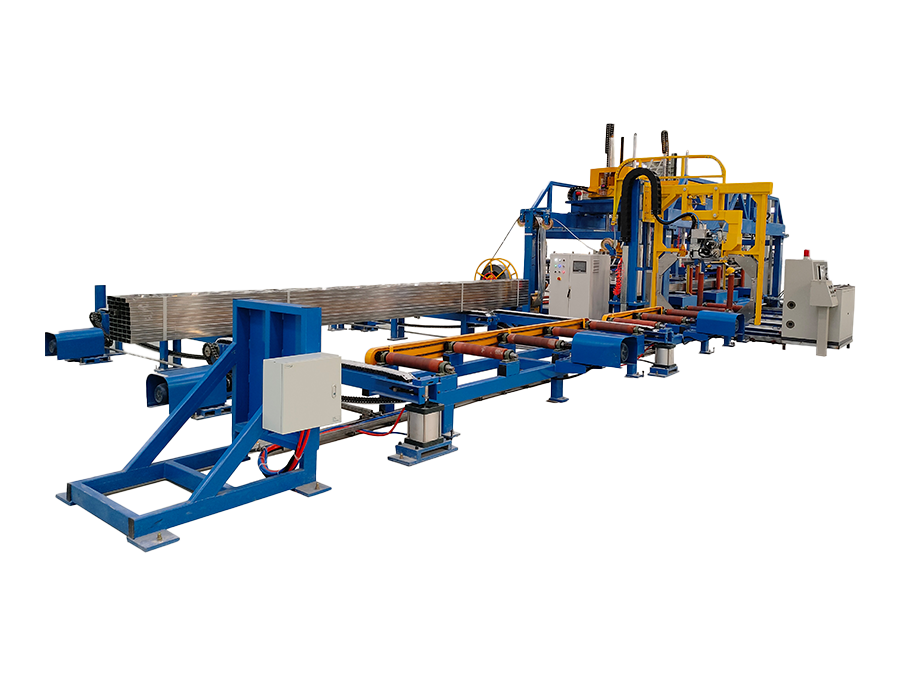
Longmen type pipe automatic palletizing machine: a powerful assistant for intelligent warehousing
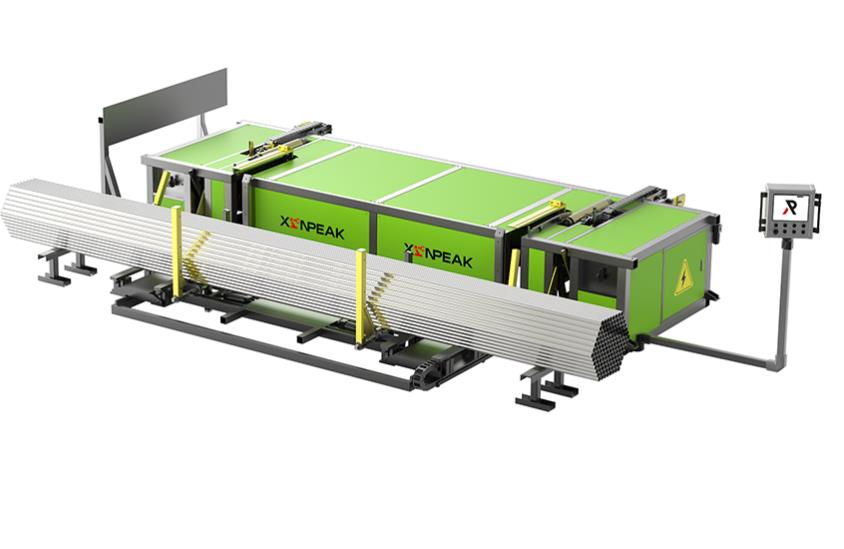
Steel pipe palletizing machine is an automated equipment designed specifically for steel pipe production. It uses mechanical arms, magnetic suction devices, or sensors to automatically grasp
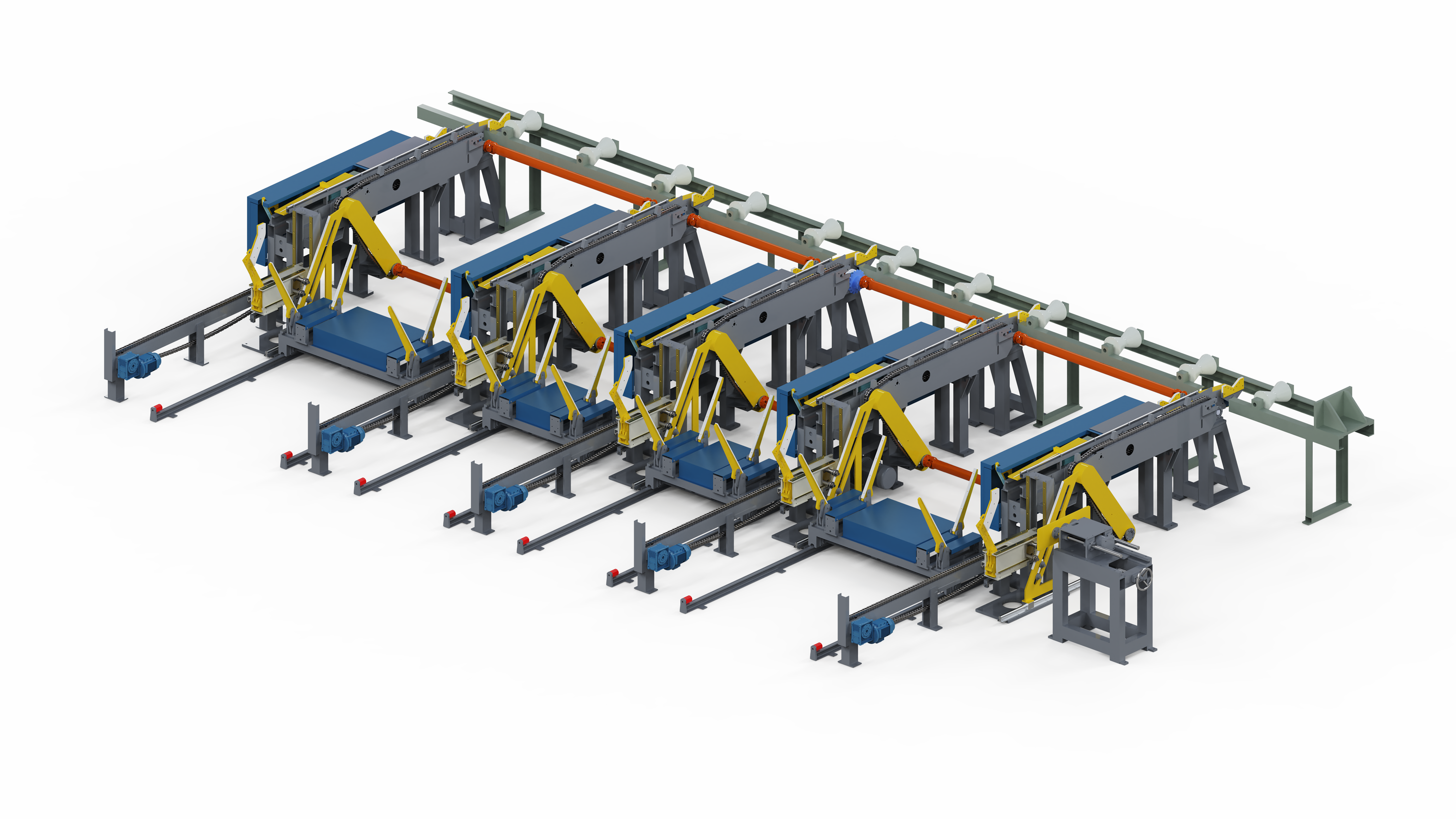
The automatic steel palletizer is an automated equipment designed specifically for steel production, processing, or storage. Its core function is to achieve automatic grabbing, handling, stacking,
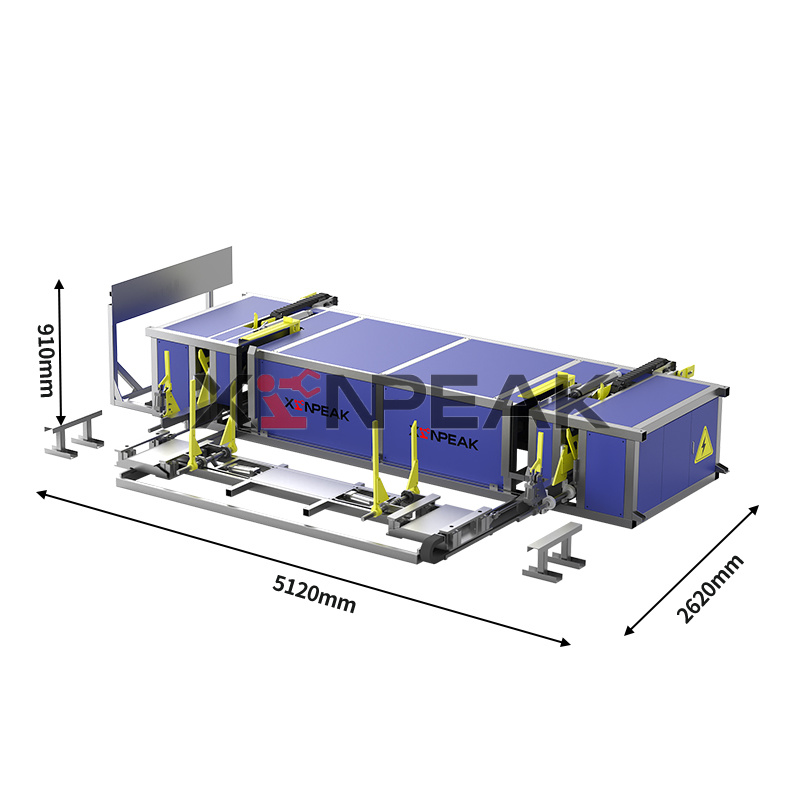
The steel pipe palletizer is a specialized mechanical device used for automated organization, stacking, and handling of steel pipes, falling under the category of logistics equipment in the field of industrial automation.
Contact Us
You can contact us through the following four methods. We will reply to your inquiry within 2-8 hours after receiving it!
Call Us
Send Email
Leave a Message
Add WeChat or WhatsApp